French Creek Pollution Control Centre: Expansion and Odour Control Upgrades
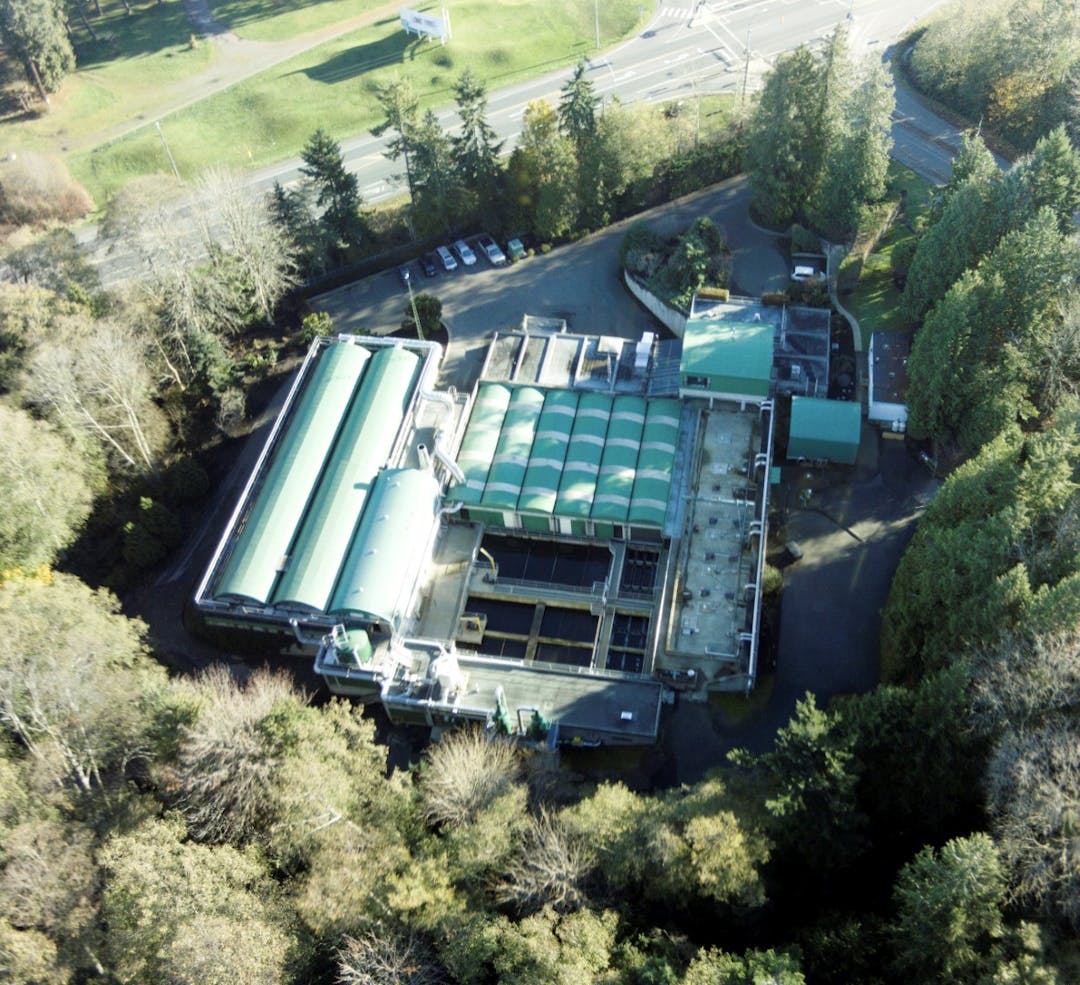
French Creek Pollution Control Centre (FCPCC) treats wastewater from about 29,000 people and businesses. It serves the communities of: Qualicum Beach, Parksville, French Creek, Pacific Shores, Surfside, and Barclay Crescent. FCPCC also treats trucked waste from homes with septic systems and holding tanks. FCPCC currently provides Secondary Treatment which is the provincial and federal requirement.
The RDN is developing an expansion and odour upgrade to:
increase plant capacity by about 30% and meet the service area demands to 2040,
improve operational efficiency and replace aging infrastructure in the existing plant,
incorporate extensive odour control upgrades for the existing plant,
include odour controls for the expansion, and
contribute to carbon neutrality by using solar panels and recovering heat from treated effluent.
How you can get involved
To stay informed of project updates, please:
"Register" and "subscribe" using the tabs on the right-hand side of the page. By doing so you will receive occasional emails with project updates.
Review the background documents. Content will be added as the project progresses.
Explore this webpage to find out more.
To report an odour
If you detect odours coming from FCPCC, you can report it directly to plant staff by calling:
250-248-5794 during business hours or
1-800-862-3429 after hours.
All odour reports are recorded and investigated. We encourage you to make your report as soon as you can so we can accurately investigate the cause (and sometimes relieve the odour).
French Creek Pollution Control Centre (FCPCC) treats wastewater from about 29,000 people and businesses. It serves the communities of: Qualicum Beach, Parksville, French Creek, Pacific Shores, Surfside, and Barclay Crescent. FCPCC also treats trucked waste from homes with septic systems and holding tanks. FCPCC currently provides Secondary Treatment which is the provincial and federal requirement.
The RDN is developing an expansion and odour upgrade to:
increase plant capacity by about 30% and meet the service area demands to 2040,
improve operational efficiency and replace aging infrastructure in the existing plant,
incorporate extensive odour control upgrades for the existing plant,
include odour controls for the expansion, and
contribute to carbon neutrality by using solar panels and recovering heat from treated effluent.
How you can get involved
To stay informed of project updates, please:
"Register" and "subscribe" using the tabs on the right-hand side of the page. By doing so you will receive occasional emails with project updates.
Review the background documents. Content will be added as the project progresses.
Explore this webpage to find out more.
To report an odour
If you detect odours coming from FCPCC, you can report it directly to plant staff by calling:
250-248-5794 during business hours or
1-800-862-3429 after hours.
All odour reports are recorded and investigated. We encourage you to make your report as soon as you can so we can accurately investigate the cause (and sometimes relieve the odour).
Use mobile mass spectrometry instrumentation to analyze molecular fingerprints associated with specific odour-producing substances
Map chemical concentrations of a set of target compound classes including reduced sulfur compounds, amines, hydrocarbons and volatile fatty acids. Mapping will be done both at the French Creek Pollution Control Centre and in the surrounding neighborhood
Use mobile mass spectrometry instrumentation to analyze molecular fingerprints associated with specific odour-producing substances
Map chemical concentrations of a set of target compound classes including reduced sulfur compounds, amines, hydrocarbons and volatile fatty acids. Mapping will be done both at the French Creek Pollution Control Centre and in the surrounding neighborhood
Analyse the odourants associated with human activities and natural sources including wastewater treatment, green waste production, agriculture, as well as natural marine and freshwater sources
Assess the seasonal variability in odour sources and regional distributions
Recommend potential odour control measures.
The proposed monitoring program will
start in March 2019 and run for a year with multi-day sampling campaigns in
spring, summer, fall and winter. Program results will inform the design of the
upgrades and produce recommendations to improve air quality, reduce odour
complaints related to FCPCC, and enhance the overall quality of life for
neighbouring residents and visitors.
At the Regular Board Meeting on July 24, 2018, the RDN Board awarded the Engineering Services contract for the detailed design, tendering and construction services for the French Creek Pollution Control Centre Stage 4 Expansion Project and Odour Control Upgrades to AECOM for $2,506,980.
At the Regular Board Meeting on July 24, 2018, the RDN Board awarded the Engineering Services contract for the detailed design, tendering and construction services for the French Creek Pollution Control Centre Stage 4 Expansion Project and Odour Control Upgrades to AECOM for $2,506,980.
Preliminary design of the FCPCC Expansion and Odour Updgrade Project was completed in 2018. A peer review of the preliminary design will optimize the detailed design
phase, going on now, so the constructed plant performs well and operates
efficiently.
Preliminary design of the FCPCC Expansion and Odour Updgrade Project was completed in 2018. A peer review of the preliminary design will optimize the detailed design
phase, going on now, so the constructed plant performs well and operates
efficiently.
Process selection was completed in 2011 and recommended that the expansion provide secondary treatment with activated sludge technology. Preliminary design, completed in 2018, recommended that activated sludge be provided using Combined Treatment Units where bioreactors are on the outside of the unit and secondary clarifiers on the inside of the unit.
Process selection was completed in 2011 and recommended that the expansion provide secondary treatment with activated sludge technology. Preliminary design, completed in 2018, recommended that activated sludge be provided using Combined Treatment Units where bioreactors are on the outside of the unit and secondary clarifiers on the inside of the unit.