
Natural Assets Management Project
Welcome to the Natural Assets Management (NAM) Project Page
The Regional District of Nanaimo (RDN) is getting started on a climate adaptation plan for natural assets, an effort called the Natural Assets Management (NAM) Project.
Natural assets—including forests, wetlands, rivers, aquifers, and parks—play a vital role in supporting healthy, resilient communities by providing services such as clean water, flood protection, recreation opportunities, biodiversity, and climate regulation. Through this project, the RDN is working to better understand the value of these natural systems, assess the risks they face from a changing climate, and identify practical actions to protect and manage them for future generations.
The NAM Project is intended to support informed decision-making, strengthen community resilience, and ensure the benefits provided by natural assets continue to support residents, ecosystems, and sustainable service delivery across the region.
Learn more about the project:
- What is the anticipated outcome of the project?
- Steps ahead to develop the plan.
- Check out the Natural Assets Management dashboard
Public Engagement
There are many ways to participate in the NAM project. Residents, First Nations, community groups, landowners, municipalities, and other interested parties are encouraged to share their knowledge, experiences, and ideas by attending open houses and community events, reviewing project materials, and providing feedback on the draft plan developed from this project. Input will help identify priorities, refine management options, and improve the final plan. Feedback will be summarized and shared to show how it influenced decision-making.
Participate now:
- Pin your favourite natural area in the RDN on our Mapping Tool
This page will be updated as the project progresses. Upcoming engagement opportunities, background materials and reports will be shared here as they become available.
Want to stay informed and learn more?
- Subscribe through the Stay Informed tab to receive direct email updates
- Visit the Document Library to learn more about the project.
- See our FAQs or What's New tab to better understand this project.
- Ask a question in the Ask a Question tab and we will respond
- Share this page and spread the word!
-
Building a Plan to Protect Natural Assets and Strengthen Climate Resilience
The NAM project is based on a process consisting of the following six steps:
Continue reading
Step 1 - Determine the Current State of Natural Assets
Understanding what natural assets exist across the region and where they are located. It includes updating the natural asset inventory using the most current data and mapping of forests, wetlands, aquifers, rivers, and parks.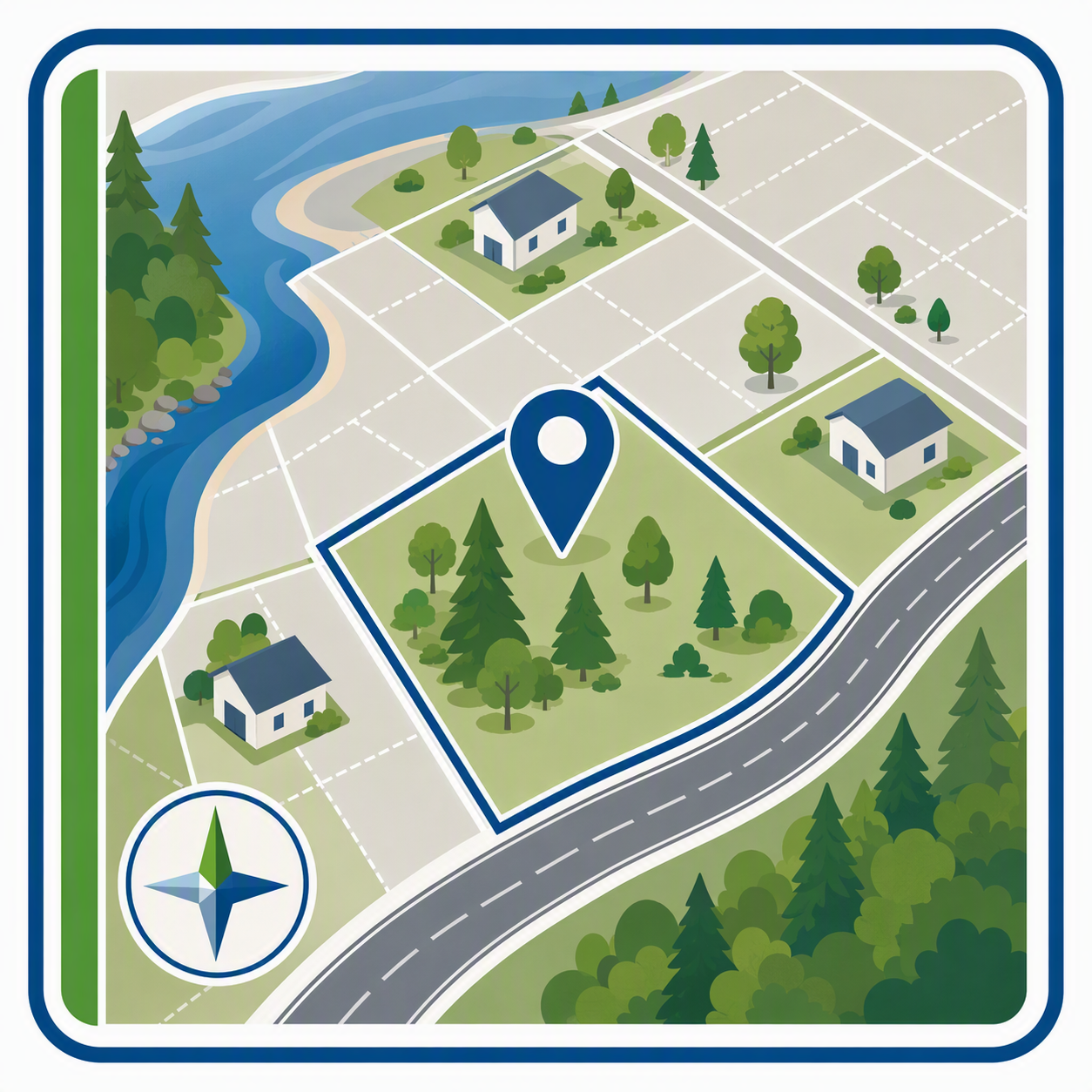
Step 2 - Assess Condition and Risks
Evaluates the condition of natural assets and identifies risks that may affect them, including climate-related risks such as drought, flooding, wildfire, and development pressures.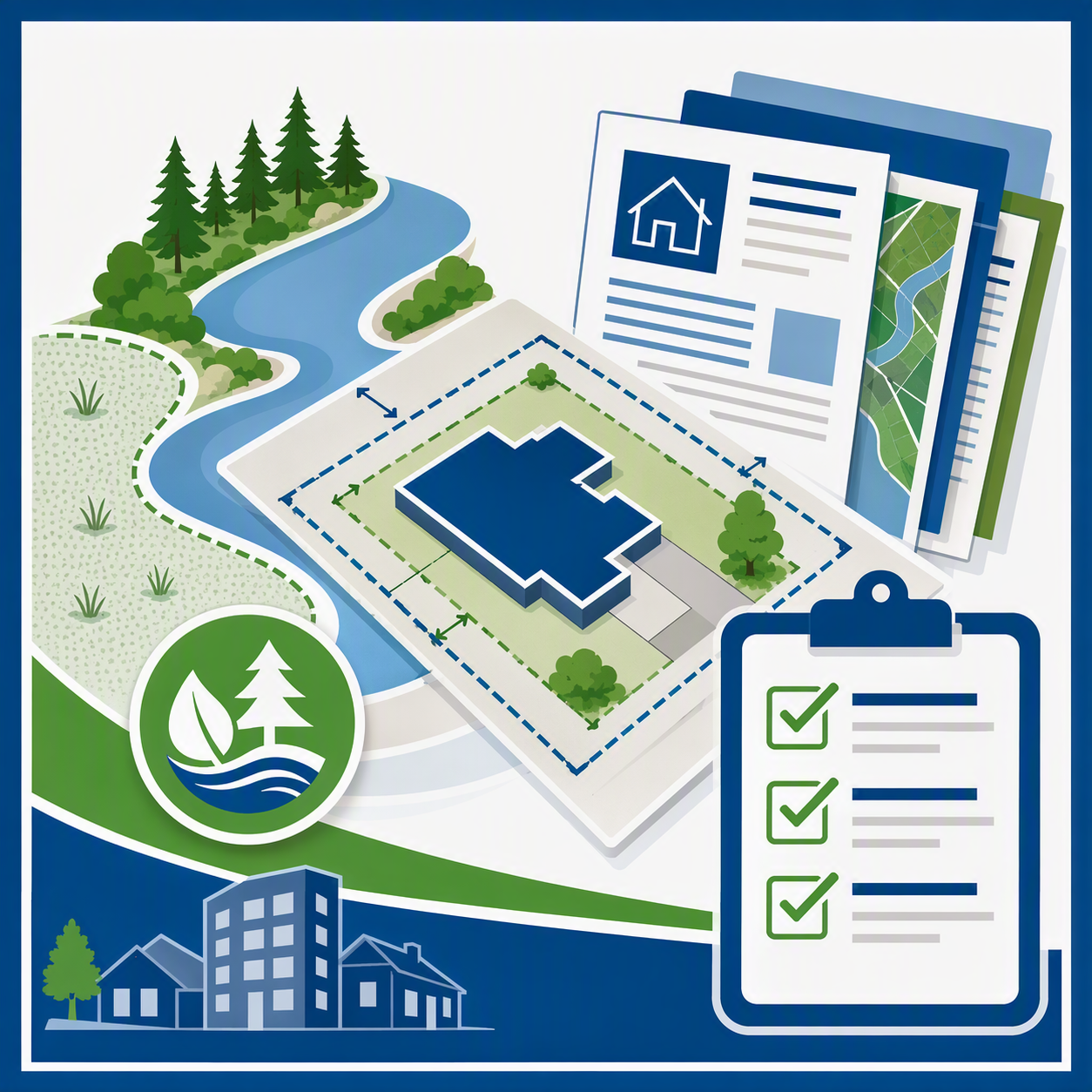
Step 3 - Evaluate Ecosystem Services
Identifies and evaluates the services -
Natural Assets Support Community Well-Being and Service Delivery
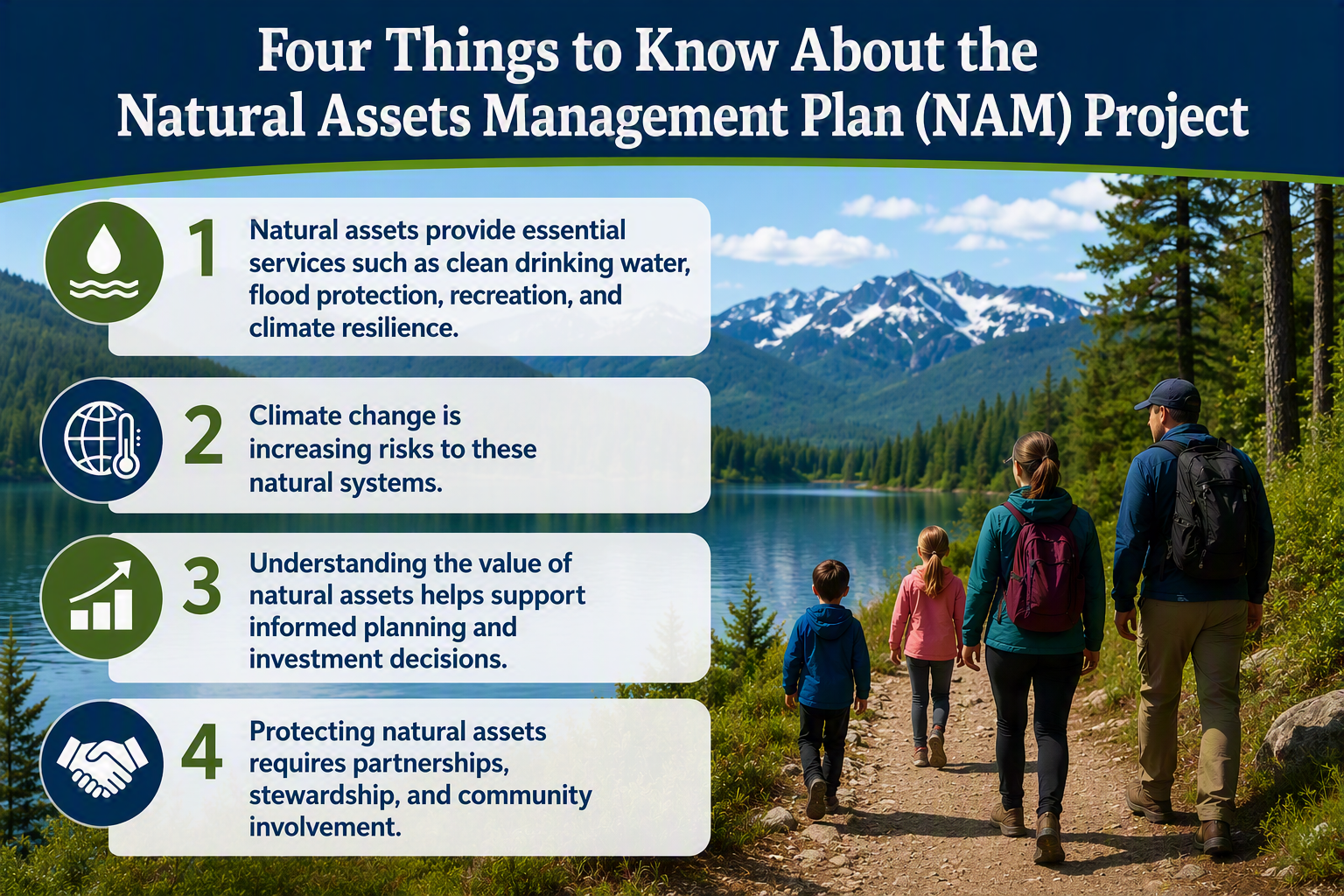
Forests, wetlands, rivers, aquifers, and parks are natural assets that provide essential services like clean water, flood protection, recreation, and climate resilience to support community well-being. The NAM project is intended to help the Regional District of Nanaimo (RDN) better understand how these natural systems support communities and how toContinue reading
-
Understanding Natural Assets Supports Better Decision Making
The NAM Project has the following goals:
Continue reading
Goal 1: Understanding the value of natural assets:
Gain a better understanding of the benefits natural assets provide like a clean water supply, recreational opportunities and climate protection and how important they are to everyday life. Goal 2: Identifying climate-related risks:This project will identify risks such as drought, flooding and ecosystem degradation so we can plan ahead and reduce impacts.
Goal 3: Prioritizing protection, restoration, and management:
The project will identify which natural assets and services are most important to protect, restore or manage.
Goal 4: Providing cost-effective and resilient service delivery: -
Climate Change is Increasing Risks to Natural Assets and Communities
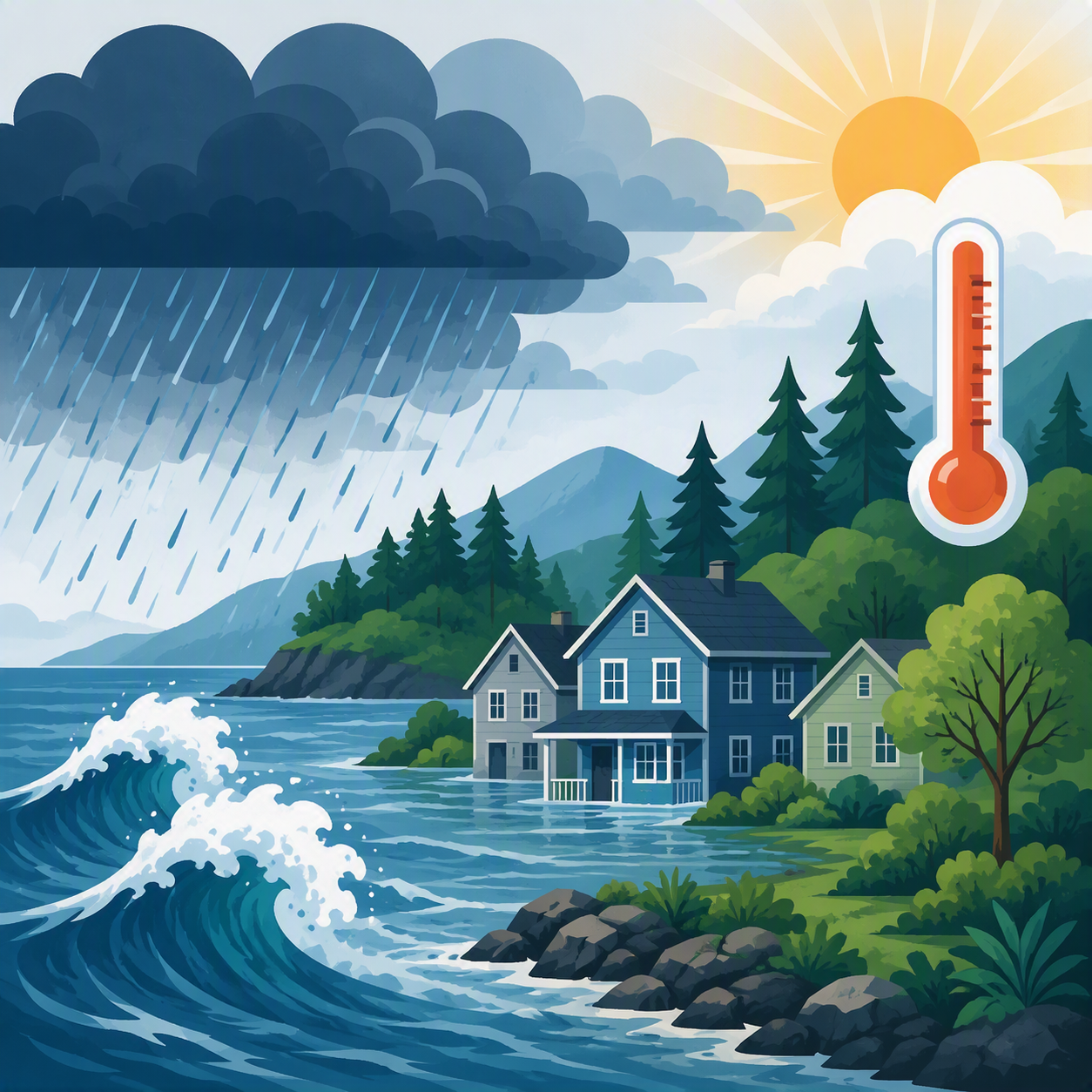
Climate change is increasing risks to natural areas such as drought, flooding, and wildfires, which place growing pressure on communities and infrastructure. Natural areas like forests, wetlands, and aquifers help reduce these risks by providing important services such as water storage, flood protection, and climate regulation.
These natural services have real value. When natural systems are degraded or lost, replacing them with engineered infrastructure such as pipes, water treatment systems, or flood control works can be costly to build, operate, and maintain.
This project has been initiated to better understand these risks and the value of natural asset services. ItContinue reading
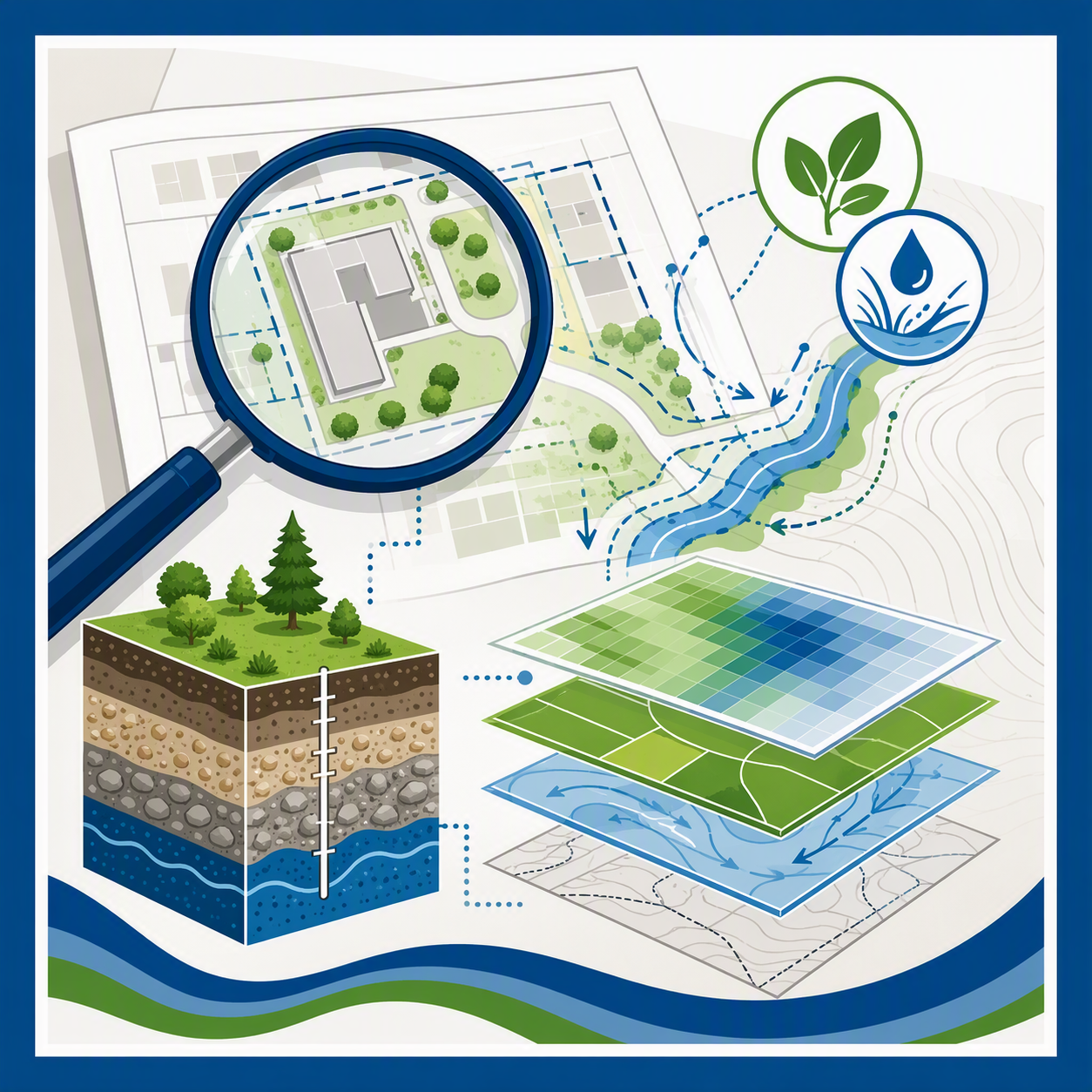


A dashboard has been created that allows users to visualize the location, extent, and condition of natural assets across the region. Click the image below to try the Dashboard.
-
 Featuring municipal leaders Jinny Tofflemire (Town of Okotoks, AB) and Duane Nicol (City of Selkirk, MB) this video highlights how local governments can take practical steps to preserve and maintain natural assets as part of sustainable, long-term infrastructure planning.
Natural asset management is helping municipalities build more resilient, affordable, and beautiful communities by working WITH nature instead of against it. By treating our forests, wetlands, and green spaces as critical infrastructure, municipalities across Canada are discovering that natural assets are more climate-resilient, more cost-effective, and better at supporting our built systems than relying solely on traditional infrastructure. YouTube video posted by Natural Assets Initiative, May 13, 2025.
-
 A clip from an interview with Emanuel Machado, Chief Administrative Officer for the Town of Gibsons in which he explains why the municipality is investing in the protection and enhancement of natural ecosystems as part of its infrastructure.
-
 Smart Prosperity Institute, Brooke and Associates, David Suzuki Foundation, and the Town of Gibsons
Natural features and ecosystems (like marshes, forests, and shorelines) can deliver services (like stormwater absorption, water filtration, erosion control) to communities.
The Municipal Natural Assets Initiative helps communities to “count” these natural assets and assign a value that’s equivalent to the service a human-built asset would provide. By counting nature as an asset, municipalities can make a strong financial case for protection and conservation, while relying less on engineered assets. YouTube video posted by the Real Estate Foundation of BC, October 22, 2018.
-
 What is the value of a berry patch or a stream in the middle of a forest? Leq’á:mel First Nation has just completed a Natural Asset Inventory and will soon start Natural Asset Accounting in Phase 2. Mike Goold is the Indigenous Forestry Referrals and Governance Support lead at LFN and he sees this project as a way to reconcile with traditional knowledge by bringing it back to the forefront of land use planning: "We want to have more involvement. We want to be more at the table when it comes to developing forest policy and how forests are managed throughout [our] territory.” LFN’s report is now available at https://naturalassetsinitiative.ca/leqamel... YouTube video posted by the BC First Nations Council, November 4, 2025.
-
 The NAI Dashboard is a work in progress here at Leq'a:mel First Nation, where we blend Western Map Data with Indigenous Traditional Knowledge to quantify and locate our natural resources and places of cultural significance to support our land stewardship efforts and future projects on Leq'a:mel First Nation's Traditional Territory. This is the Phase 1 of our dashboard, and we're so excited to share with you the hard work our Natural Resources Department has put into this project. Thank you to Bear Image Productions for their amazing work on this video, as well as our gracious funders: The Real Estate Foundation of BC, and Environment and Climate Change Canada. YouTube video posted by Leq'a:mel First Nation, May 8, 2025.
-
 Project Update and Engagement Plan Report.pdf (702 KB) (pdf)
-
NAI Level of Service and Risk Prioritization Framework.pdf (1.68 MB) (pdf)
-
FCM Grant Application Report (262 KB) (pdf)
-
Infrastructure Grant Application Report (444 KB) (pdf)
-
Summary of Inventory Results.pdf (3.68 MB) (pdf)
-
Revised Natural Asset Management Grant Report (233 KB) (pdf)

-
Email gkeller@rdn.bc.ca